

See Clearly, Live Fully – Your
Comprehensive Vision Examination
Your eyes do more than just help you see, they reflect your overall health and well-being which is why our vision examinations go beyond the basics. Using the latest in eye-testing technology, we assess every detail to ensure your sight is as sharp and comfortable as possible.
What to Expect
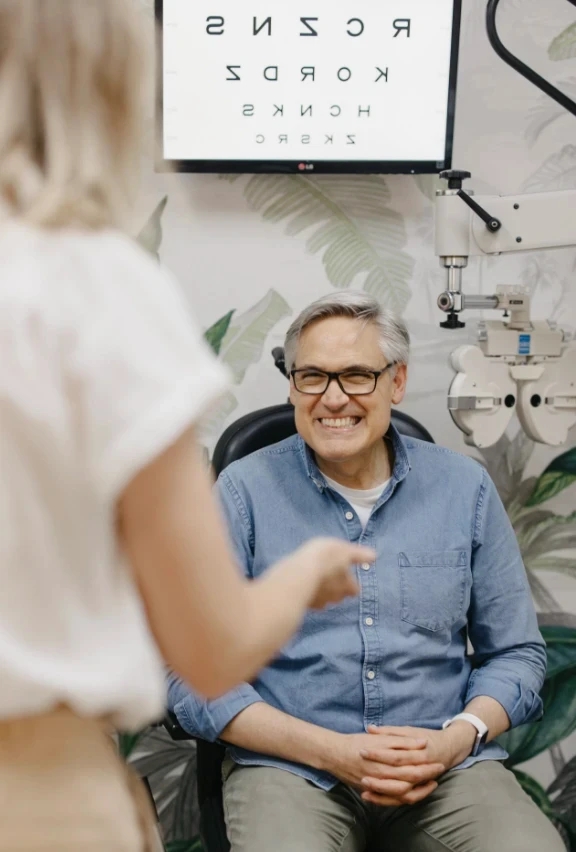
Your examination starts with a relaxed, in-depth chat about your lifestyle, health, and daily visual demands. From screen time and reading habits to sleep patterns and any medications you’re on, we take everything into account to tailor our approach to your needs.
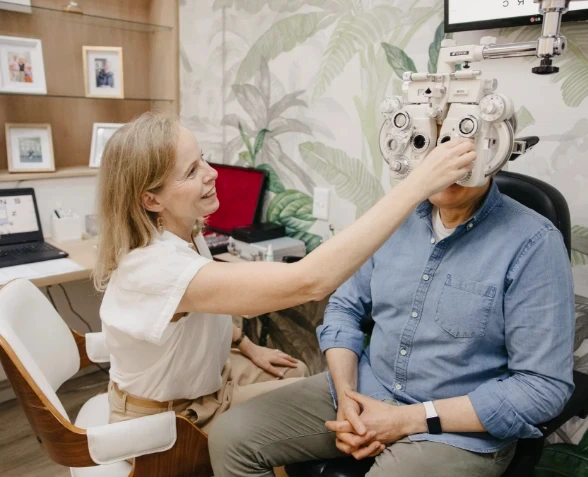
Once we begin testing, we’ll assess:
- Visual acuity: How clearly you see at different distances.
- Refractive status: Checking for nearsightedness, farsightedness, or astigmatism.
- Binocular balance: Ensuring both eyes work well together.
- Colour vision: Detecting any difficulties in distinguishing colour tones values.
- Ocular motility: Evaluating eye movement and coordination.
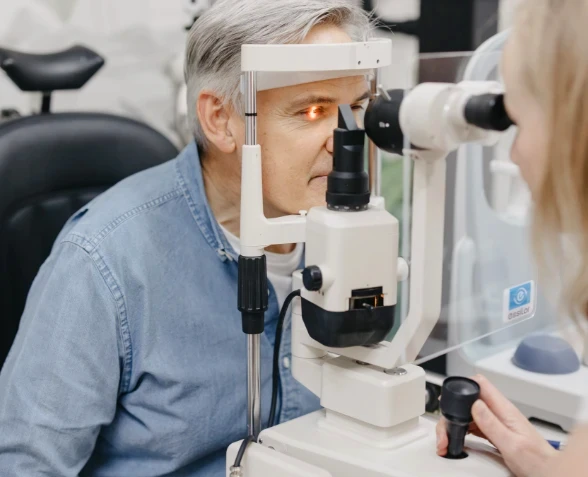
- Eye health: Screening for early signs of conditions like cataracts or macular degeneration.
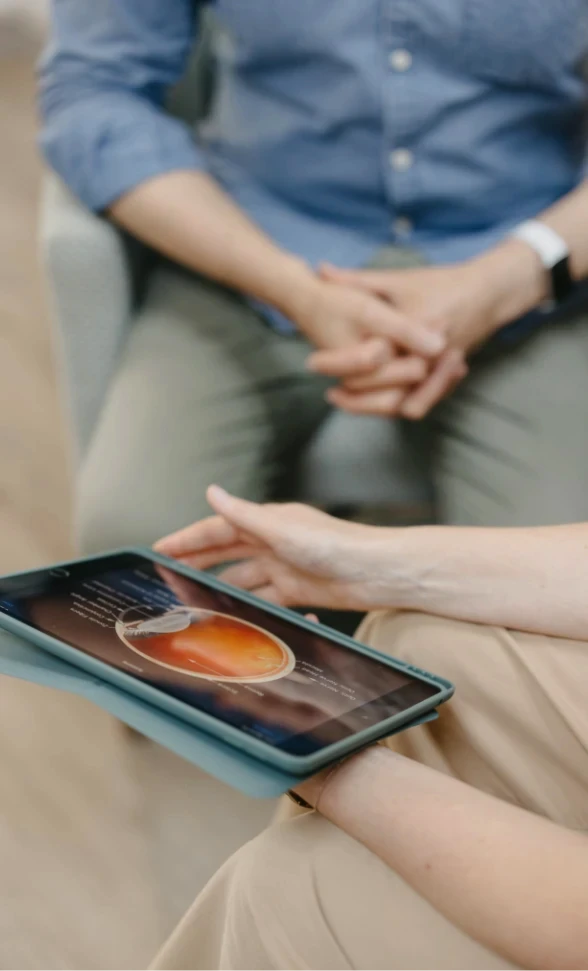
We know medical jargon can be overwhelming, so we keep it simple. Expect clear explanations, easy-to-understand visuals, and plenty of time to ask questions.
Advanced Testing for Total Peace of Mind
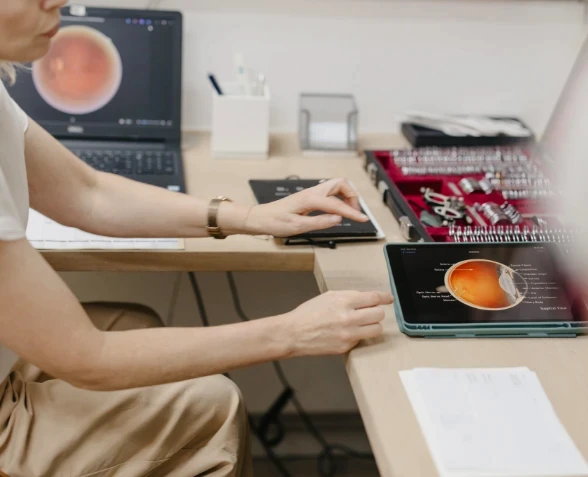
Every vision examination includes glaucoma screening and fundus photography, which captures detailed images of the back of your eye. These tests help us detect potential issues early, giving you the best chance of maintaining lifelong eye health.
Common Refractive Eye Conditions
During your vision examination, you may hear about different refractive eye conditions. Here’s what they mean:
Myopia (Short-sightedness)
If you struggle to see objects in the distance but can see up close clearly, you may have myopia. This happens when the eye’s axial length grows too long. Myopia can be influenced by genetics, prolonged indoor time, and excessive near work. Thankfully, it can be corrected and even treated with spectacle lenses or contact lenses.
Hyperopia (Farsightedness)
If near vision feels more strenuous than distance vision, you might have hyperopia. This condition is often overlooked, especially in children, and can sometimes be mistaken for attention deficits or poor concentration. Young hyperopes may believe they’re ‘just‘not readers’. Hyperopia can be corrected with spectacles or contact lenses.
Presbyopia
As we age, the clear intra-ocular lens behind the pupil gradually loses its ability to change focus. Around the age of 40, you may notice difficulty reading up close, needing to hold your book or phone further away. This natural change continues until about age 65. Regular eye exams during this period can help manage presbyopia, which is easily corrected with prescription reading glasses, multifocal lenses, or contact lenses.
Astigmatism
If objects appear elongated or slightly shadowed, especially at night or when reading fine text, you may have astigmatism. This occurs when the cornea or intra-ocular lens has an oval shape instead of a perfectly round one, causing light rays to scatter. Astigmatism can be corrected with spectacle lenses or contact lenses.

What to Bring to your Eye Examination
To make the most of your visit, please bring:
Your eyes are unique, and your eye care should be too. Book your vision examination today and see the difference a personalised approach makes.
Enquire Now
We’d love to hear from you! Let’s chat about how we can help.